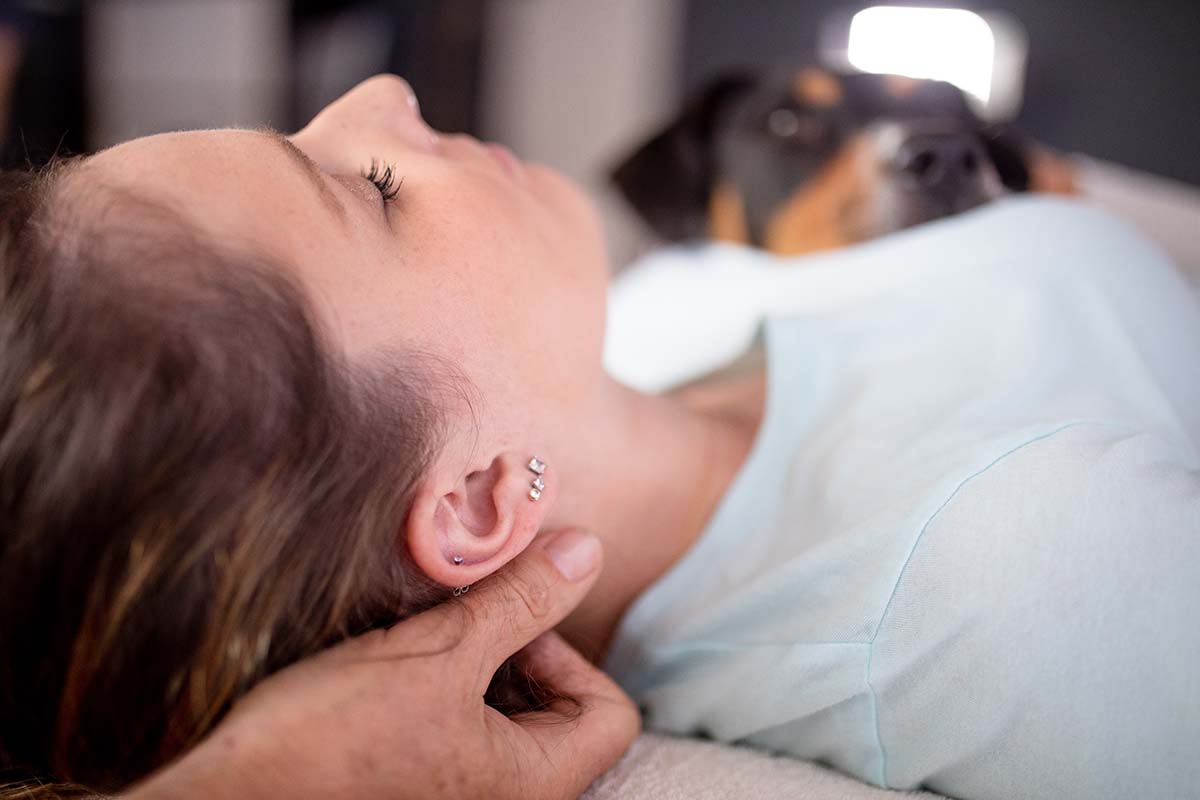
CranioSacral Therapy: Supporting the Body Let Go of What It Has Been Carrying
Trauma, chronic stress, pain, grief, injury, and years of staying alert do not affect only the mind. They can also change the way the body breathes, sleeps, moves, rests, responds to touch, and reacts to the world around it.
For Veterans, First Responders, and their families, the body may spend years doing exactly what it was trained or forced to do: stay ready, stay strong, stay alert, and keep going.
Even when the danger is over, the body may not recognize that it is safe to stand down.
That is where CranioSacral Therapy can be profoundly different.
CranioSacral Therapy is a gentle, hands-on therapy that uses very light, attentive touch to work with the body and nervous system. Rather than pushing, pulling, manipulating, or forcing the body to change, the practitioner listens through their hands for areas of tension, restriction, guarding, and imbalance.
The body is given time.
The body is given choice.
And, often for the first time in a very long time, the body is given permission to stop protecting and simply rest.
You Do Not Have to Tell the Story for the Body to Be Supported
One of the most important things about CranioSacral Therapy in trauma work is that a person does not have to explain everything that happened to them.
They do not have to relive an experience.
They do not have to find the right words.
They do not have to disclose details they are not ready to share.
Trauma can show up physically through tight muscles, shallow breathing, headaches, chronic pain, difficulty sleeping, digestive changes, heightened alertness, startle responses, exhaustion, or the inability to fully relax.
Sometimes a person may say, “I know I am safe, but my body doesn't feel safe.”
CranioSacral Therapy works with that part of the experience.
Through skilled touch, quiet presence, and careful attention to the body's responses, the practitioner creates an environment where the nervous system may begin to settle and the body can experience something different from constant vigilance.
Why Such a Gentle Touch?
People are often surprised by how light CranioSacral Therapy is.
There is no need to force the body into change.
A body that has spent years protecting itself may respond to force by protecting itself even more.
Gentle touch can communicate something very different:
You are safe here.
Nothing is being demanded of you.
You are in control.
You can respond at your own pace.
That sense of choice and safety is especially important for people who have experienced trauma, combat, emergency response, medical procedures, injury, loss, or prolonged periods of stress.
The goal is not to make something happen.
The goal is to create the conditions in which the body no longer has to work so hard to protect itself.
What Can Happen When the Nervous System Finally Slows Down?
Every person's experience is different.
Some people notice their breathing becoming deeper. Others feel warmth, softening, subtle movement, emotional release, or profound rest. Some simply realize that they have not felt that quiet inside their body in years.
A session may support a person's ability to become more aware of where they are holding tension and how their body responds when it begins to feel safer.
For someone who has lived in a constant state of readiness, that experience can be significant.
The treatment table can become a place where the body is finally listened to without being pushed, judged, hurried, or asked to perform.
Sometimes what could not be reached through words alone can begin to soften when the body feels safe enough to be heard.
CranioSacral Therapy and the Ripple Effect of Healing
Trauma rarely affects only one person.
When someone is living with pain, poor sleep, irritability, anxiety, hypervigilance, emotional withdrawal, or exhaustion, the effects can reach spouses, children, caregivers, coworkers, and relationships.
Healing can ripple outward in the same way.
When one person is able to rest more deeply, regulate more effectively, reconnect with their body, and experience greater ease, the people around them may experience that change too.
A calmer nervous system can change a conversation.
A better night's sleep can change a day.
Less pain can make connection possible again.
Feeling safer in one's own body can make it easier to be present with the people who matter most.
When one person begins to heal, many people can feel the difference.
A Different Kind of Listening
CranioSacral Therapy is, at its heart, a form of deep listening.
Instead of asking, “What is wrong with you?”
We begin with a different question:
“What has your body been carrying, and what does it need in order to feel supported?”
We do not force the answer.
We listen.
We create space.
We respect the body's timing.
And we allow healing to unfold at the pace of the person in front of us.
For Veterans, First Responders, and their families, people who have spent so much of their lives responding to the needs of others, CranioSacral Therapy offers something remarkably simple and often deeply needed:
A place where nothing is required of them.
A place where they do not have to be strong.
A place where their body can finally be heard.